中文 Chinese

Bluetooth Low Energy asset-tracking projects often begin with a straightforward goal: attach tags to important assets, install a few gateways, and confirm that the assets can be detected.
A successful pilot proves that the technology can work. A successful production deployment must prove something more: that the system can continue operating reliably as the number of assets, gateways, locations, and users increases.
The difference between a small demonstration and a scalable asset-tracking system often comes down to the infrastructure behind the tags.
Cassia Bluetooth gateways provide connectivity between BLE tags or sensors and the customer’s software platform. Cassia’s IoT Access Controller, or Cassia AC, provides centralized visibility and management for the gateway network. Together, they help organizations move from an initial proof of concept toward a deployment that can be monitored, supported, and expanded.
1. Define What “Tracking” Means for the Project
Asset tracking can mean different things depending on the operational requirement.
One organization may need to know whether a pallet is present inside a warehouse. Another may need to determine whether a tool has entered or left a production zone. A logistics company may need to collect information from tagged assets while they are being transported.
Before selecting hardware or planning gateway locations, the project team should define the questions the system needs to answer:
- Is the asset present?
- In which facility or operational zone was it detected?
- When was it last seen?
- Has it moved between designated areas?
- Does the attached sensor report temperature, motion, battery level, or another condition?
- How frequently does the application need updated information?
These requirements affect tag behavior, gateway placement, data volume, application logic, and the type of testing required during the pilot.
Cassia’s personnel and asset-tracking solution is designed to connect BLE beacons and tags across enterprise environments, including applications that involve large numbers of broadcasting devices.
2. Treat Gateway Coverage as Part of the System Design
A BLE tag can only provide useful visibility when its transmissions are collected reliably.
Gateway performance can be influenced by the actual operating environment. Warehouse racks, walls, machinery, metal containers, moving vehicles, installation height, and radio interference may all affect how consistently tags are detected.
For this reason, gateway placement should not be based only on a theoretical floor plan or published open-space range.
A representative pilot should use:
- The actual tags or sensors planned for production
- Realistic tag transmission settings
- Proposed gateway mounting locations
- Normal asset movement patterns
- Typical facility activity and radio conditions
- The network connection that will be used in production
The goal is not simply to demonstrate that a tag can be detected once. The goal is to confirm that the gateway infrastructure provides the level of visibility required by the business workflow.
Cassia also provides Pure Scan functionality intended to improve beacon detection in environments containing large numbers of BLE devices or significant radio noise.
3. Match the Gateway to the Operating Environment
Asset-tracking deployments may extend across several different environments. A single project could include an indoor warehouse, an outdoor loading area, a vehicle fleet, and an industrial production site.
Selecting the appropriate gateway for each environment helps create a more consistent overall architecture.
Indoor facilities
The Cassia E1000 is designed for indoor enterprise applications. It can support asset-tracking deployments in environments such as warehouses, hospitals, offices, schools, and manufacturing facilities.
Industrial and outdoor locations
The Cassia X2000 is designed for industrial and outdoor deployments where rugged construction, flexible installation, and broad BLE coverage are important.
Mobile and cellular-connected applications
The Cassia M2000 is a compact indoor cellular Bluetooth gateway that supports 4G and Wi-Fi backhaul. Its design, GPS support, and DC power options make it suitable for mobility, rapid deployment, and vehicle-based applications.
Hazardous industrial environments
The Cassia ATX2000 is designed for supported hazardous-area deployments. It features an IP66 and NEMA 4-rated enclosure and certifications for Zone 2, Zone 22, and Division 2 environments.
Using gateway models that fit the physical and networking requirements of each site allows the customer to extend the same BLE infrastructure across different operating environments.
4. Plan the Complete Data Path
Tags and gateways are only part of the asset-tracking solution.
The complete architecture generally includes:
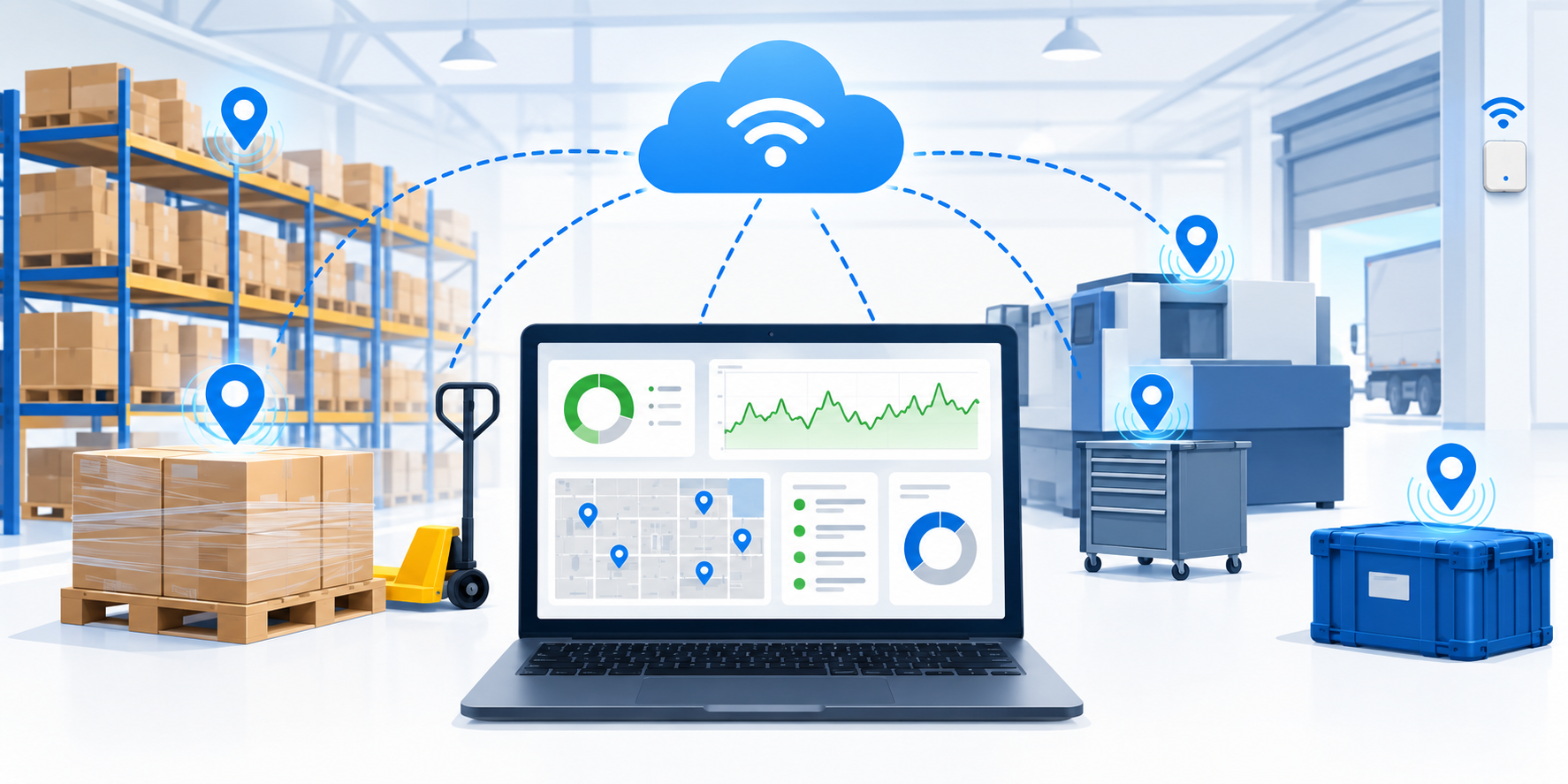
BLE tags or sensors → Cassia gateways → IP network → customer software platform
Cassia gateways collect information from compatible BLE devices and make that information available through IP-based communications. The customer’s software platform can then process the data, apply business rules, store history, generate alerts, and present asset information to users.
The integration design should be addressed during the pilot rather than postponed until the rollout.
Important questions include:
- What BLE data must be collected?
- Will the devices broadcast data, require bidirectional connections, or use both?
- How frequently should information be forwarded?
- Which application will receive the data?
- What network connection will each gateway use?
- How will temporary network interruptions be handled?
- Who will monitor the gateway infrastructure?
Defining the complete data path early helps ensure that the pilot represents the planned production architecture.
5. Design for Centralized Management
Managing one or two gateways manually may be reasonable during an early test.
That approach becomes difficult when a deployment grows across multiple buildings, facilities, vehicles, customers, or geographic regions.
Cassia AC provides a centralized platform for deploying and managing Cassia Bluetooth gateways. It is designed to manage hundreds of gateways and monitor thousands of connected BLE devices from one interface.
Through Cassia AC, authorized teams can centrally review and manage the supporting Bluetooth infrastructure instead of treating every gateway as an isolated device.
Centralized management includes:
- Viewing gateway status
- Monitoring detected or connected BLE devices
- Managing gateway configurations
- Organizing gateways by customer, site, or project
- Performing firmware updates
- Reviewing system events and operational information
- Supporting remote troubleshooting
- Accessing Bluetooth locationing and roaming capabilities
Cassia AC does not replace the customer’s asset-tracking application. The application provides the business-facing asset information and workflows. Cassia AC helps the operations or technical team manage the gateway infrastructure that collects and transports the BLE data.
6. Use the Pilot to Test Operations, Not Just Technology
A pilot should test more than basic BLE communication.
It should also help the organization understand how the system will be installed, managed, and supported after deployment.
A production-oriented pilot should evaluate:
- Whether tags are detected consistently in required areas
- Whether gateway placement supports the intended zones
- Whether Ethernet, Wi-Fi, or cellular connectivity is reliable
- Whether the application receives the required data
- Whether gateway status can be monitored remotely
- Whether technical teams can diagnose common problems
- Whether the architecture can be repeated at another location
- Whether additional gateways can be added without redesigning the system
A technically successful demonstration may still reveal operational limitations. Identifying those limitations during the pilot is far less disruptive than discovering them after hundreds or thousands of assets have been deployed.
7. Create a Repeatable Deployment Model
Scalable asset tracking depends on repeatability.
Once the pilot architecture has been validated, the organization should document a standard deployment model that can be reproduced across additional locations.
That model may include:
- Recommended gateway models by environment
- Standard mounting locations and installation heights
- Required power and network connections
- Gateway naming and site-grouping conventions
- Tag configuration requirements
- Application-integration settings
- Firmware and configuration policies
- Monitoring and escalation procedures
- Site acceptance-testing requirements
This allows organizations and solution providers to create an architecture that can be adapted to different environments without managing every site as a completely separate system.
Building the Infrastructure Behind Asset Visibility
BLE asset tracking is often introduced as a combination of tags and software. In practice, gateway coverage, network connectivity, centralized management, and support processes are equally important to long-term success.
Cassia Bluetooth gateways provide the connection between BLE assets and the customer’s software platform. Cassia AC helps teams centrally manage and monitor the gateway infrastructure as the deployment expands.
By considering these components during the pilot stage, organizations can build an asset-tracking solution that is easier to deploy, operate, troubleshoot, and scale.
To learn more about how Cassia Networks can support your asset tracking project, contact our team at sales@cassianetworks.com.