中文 Chinese

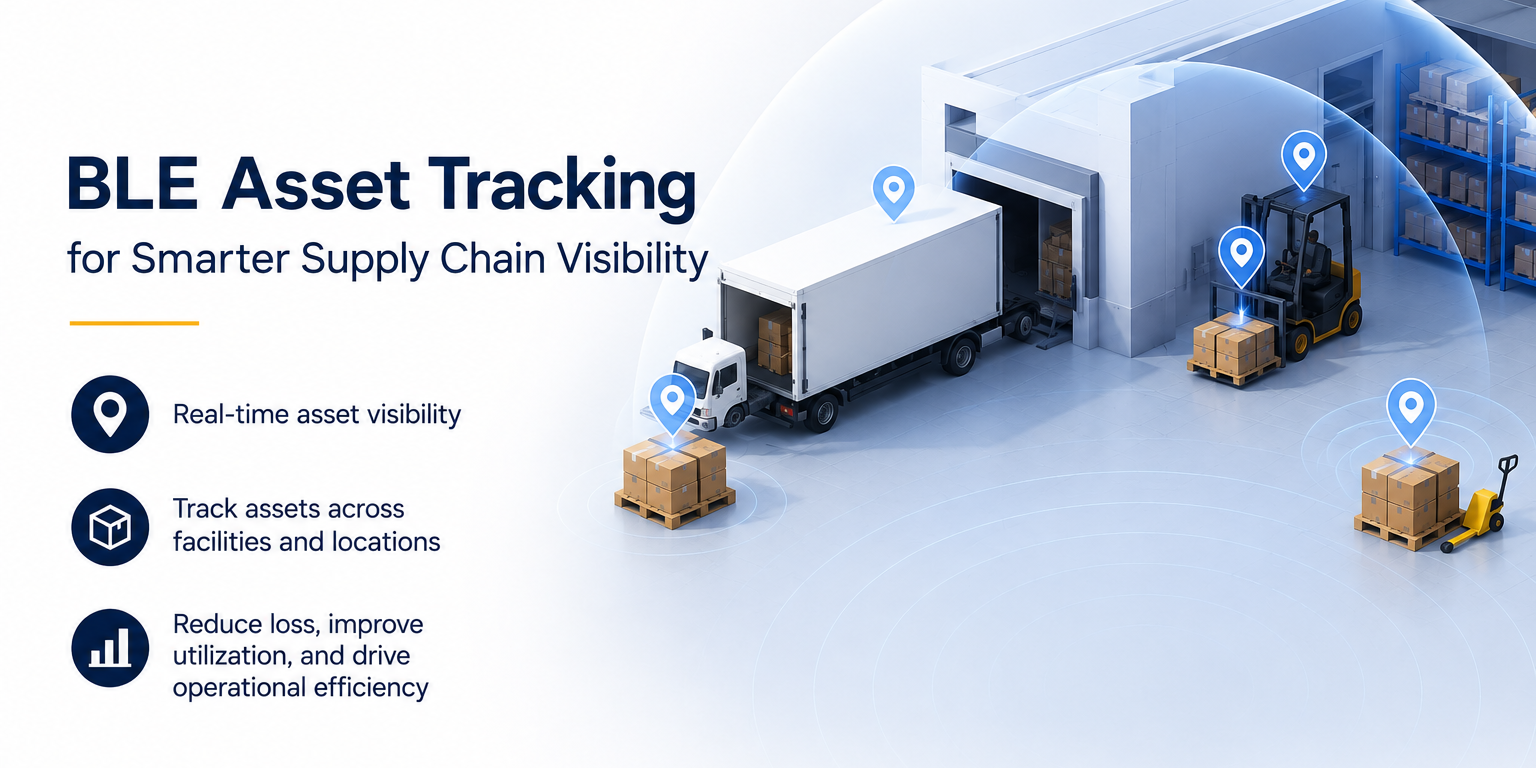
Asset tracking is no longer just about finding a missing tool or locating equipment inside one building. For many organizations, it is becoming a critical part of how they manage supply chains, logistics, inventory, operations, and customer service.
As companies move pallets, totes, carts, containers, equipment, packages, and returnable assets across warehouses, vehicles, loading docks, yards, and facilities, they need better visibility into where those assets are and how they are moving.
That is where Bluetooth Low Energy, or BLE, asset tracking becomes important.
A BLE asset tracking solution uses Bluetooth tags, sensors, and gateways to help businesses detect, monitor, and manage assets across real-world environments. Instead of relying only on manual scans, spreadsheets, or periodic inventory checks, companies can use BLE infrastructure to create a more automated and scalable visibility layer.
Cassia Networks supports scalable BLE asset tracking with the X2000 for long-range outdoor and industrial environments, the E1000 for indoor enterprise deployments, the M2000 for mobile and cellular-connected use cases, and Cassia AC for centralized gateway management across sites.
The Problem with Limited Asset Visibility
Many operations still depend on manual processes to track assets. Workers may scan barcodes, search for missing equipment, count inventory by hand, or update records after assets move from one location to another.
This may work for a small pilot or a single facility. But as operations scale across multiple sites, vehicles, and partners, manual tracking becomes difficult.
Companies often need answers to questions such as:
- Where is this asset right now?
- Did it arrive at the correct facility?
- Was it loaded onto the right vehicle?
- How long has it been sitting in one area?
- Can we reduce manual scans and improve inventory accuracy?
- Can we track reusable assets across multiple locations?
Without reliable visibility, companies can experience asset loss, shipping delays, over-purchasing, idle inventory, inefficient labor, and gaps in operational data.
How BLE Asset Tracking Helps
BLE asset tracking gives organizations a more automated way to monitor the movement and status of assets.
Bluetooth tags or sensors can be attached to pallets, totes, carts, containers, tools, equipment, medical devices, packages, returnable transport items, or other assets. Cassia Bluetooth gateways detect those BLE devices and send the data to the customer’s software platform, cloud application, or IoT system.
This helps businesses create a live view of asset movement across warehouses, distribution centers, loading docks, logistics yards, manufacturing facilities, healthcare environments, cold chain operations, and mobile deployments.
BLE can support many asset tracking needs, including zone-level visibility, real-time location visibility, automated inventory checks, shipment verification, receiving automation, returnable asset tracking, cold chain monitoring, equipment utilization tracking, and mobile asset tracking.
Matching the Gateway to the Environment
Enterprise asset tracking does not happen in only one type of environment. A single deployment may include indoor warehouses, outdoor yards, loading docks, vehicles, temporary staging areas, and remote facilities.
That is why Cassia provides multiple Bluetooth gateway options for different asset tracking scenarios.
The Cassia X2000 Bluetooth Gateway is ideal for outdoor, industrial, and long-range asset tracking deployments. It can support use cases such as logistics yards, loading docks, outdoor storage, manufacturing sites, campuses, and large facilities where extended BLE coverage and rugged hardware are important.
The Cassia E1000 Bluetooth Gateway is well-suited for indoor enterprise environments. It can support asset tracking in warehouses, hospitals, offices, schools, retail backrooms, equipment rooms, and other indoor spaces where customers need reliable BLE coverage for fixed tracking zones.
The Cassia M2000 Bluetooth Gateway is designed for mobile, cellular-connected, and quick-deployment use cases. With cellular backhaul and GPS support, it can support asset tracking in vehicles, temporary deployments, remote sites, mobile carts, and locations where Ethernet or Wi-Fi may not be available. The M2000’s GPS support can help provide gateway location context for mobile deployments, while BLE tags and sensors provide asset-level data detected by the gateway.
Together, the X2000, E1000, and M2000 help customers build a more complete BLE asset tracking infrastructure across fixed, mobile, indoor, outdoor, and multi-site environments.
Centralized Management with Cassia AC
A successful asset tracking deployment needs more than tags and gateways. It also needs a way to manage the gateway network after it goes live.
In a small pilot, a few gateways may be simple to configure and monitor. In a production deployment, customers may need to manage many gateways across multiple facilities, regions, or operational zones.
Cassia’s IoT Access Controller, or Cassia AC, provides centralized management for Cassia Bluetooth gateways and connected BLE devices. With Cassia AC, teams can monitor gateway status, manage gateway settings, support firmware updates, review system events, and organize gateways across different sites or projects.
For asset tracking deployments, this centralized management layer helps customers move from a small proof of concept to a scalable production system.
A Stronger Foundation for Scalable Asset Tracking
Asset tracking is becoming a foundation for smarter operations.
When businesses can automatically detect assets, monitor movement, reduce manual scans, and improve visibility across locations, they can make faster and better decisions. They can reduce loss, improve asset utilization, optimize workflows, and create more accurate operational data.
Cassia Networks provides the Bluetooth IoT infrastructure needed to support these goals.
By combining Cassia’s X2000, E1000, and M2000 Bluetooth gateways with Cassia’s IoT Access Controller, businesses can build BLE asset tracking deployments that are easier to manage, easier to integrate, and better prepared to scale across real-world supply chain, logistics, industrial, healthcare, and enterprise environments.
Frequently Asked Questions
What is BLE asset tracking?
BLE asset tracking uses Bluetooth Low Energy tags, sensors, and gateways to help businesses detect, monitor, and manage assets such as pallets, totes, carts, containers, tools, equipment, packages, and returnable transport items.
Which Cassia gateway is best for outdoor asset tracking?
The Cassia X2000 is best suited for outdoor, industrial, and long-range asset tracking deployments such as logistics yards, loading docks, outdoor storage areas, campuses, manufacturing sites, and large facilities.
Which Cassia gateway is best for indoor asset tracking?
The Cassia E1000 is well suited for indoor enterprise asset tracking in warehouses, hospitals, offices, schools, retail backrooms, equipment rooms, and other indoor environments.
When should businesses use the Cassia M2000 for asset tracking?
The Cassia M2000 is useful for mobile, cellular-connected, and quick-deployment asset tracking use cases, including vehicles, temporary deployments, remote sites, mobile carts, and locations where Ethernet or Wi-Fi may not be available.
How does Cassia AC support asset tracking deployments?
Cassia AC helps businesses centrally manage Cassia Bluetooth gateways, monitor gateway and end-device status, update firmware, review system events, and organize gateways across different sites or projects.
To learn more about how Cassia Networks can support your asset tracking project, contact our team at sales@cassianetworks.com.